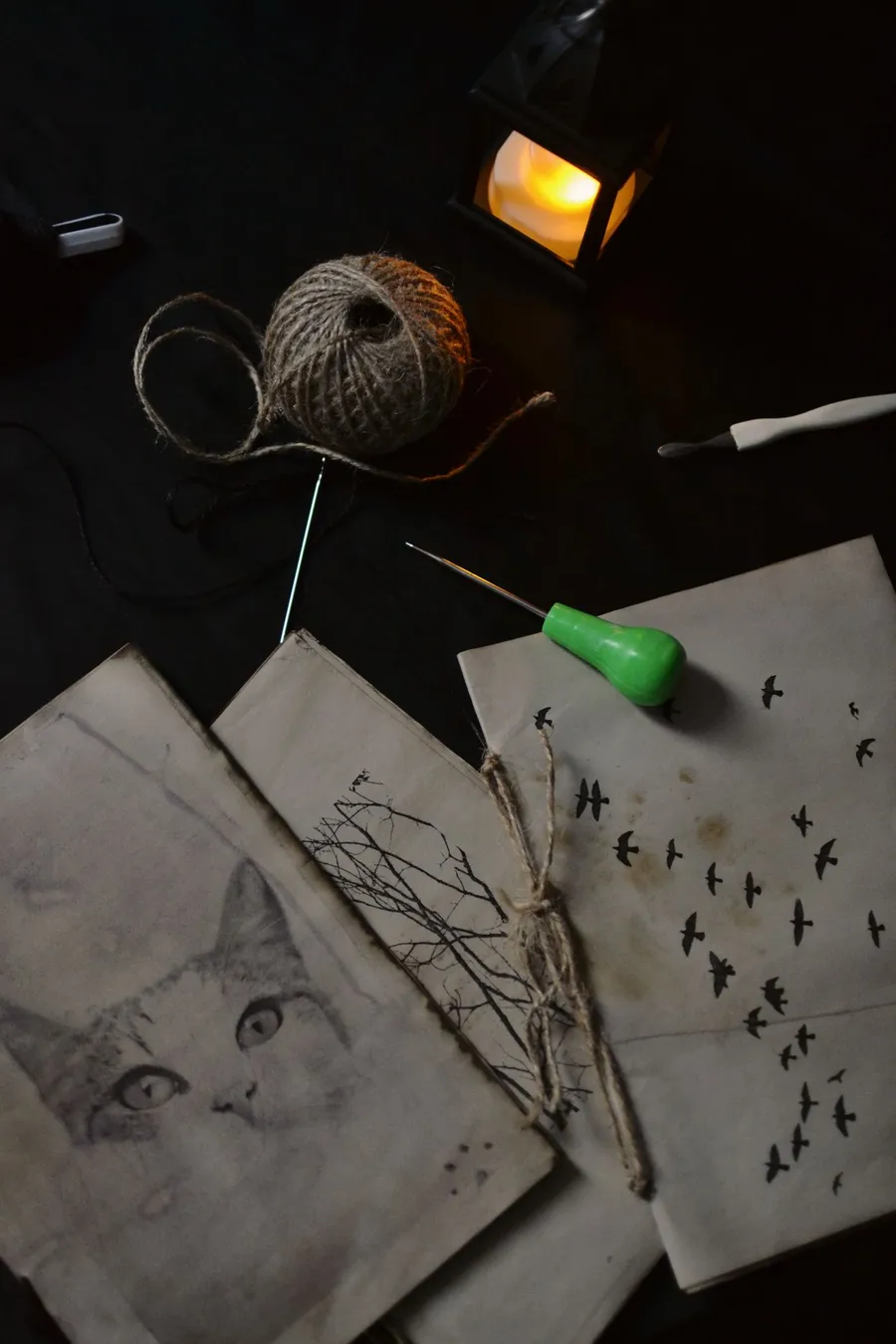
A brown folder serves as a jacket for a series of hand-sewn notes. The first booklet carried observations about a front garden. A new one records a table of sizes for the workshop. The jacket is used regularly because its paper feels good and protects the inner folds. The old title remains near its edge, where it almost looks as though it still names what is inside. A replaceable label could preserve the useful wrapper without asking the reader to remember each time the contents changed.
Begin by making a smaller dummy for the label's motion. The new subject could go under a light band, slide into a shallow holder or tie to a removable outer piece. Choose one that can be examined while the book remains closed. Mark where the hand would usually take the new label out and where the cover opens. Those paths can coincide easily with a corner you already need for lifting a page. Give each operation enough space to work on its own.
Try a label with two states
Fill the carrier with a real temporary subject. Use the longest plausible line and look at the margin it needs. Then test the empty carrier. A space left unfilled should still be recognizable as a place to put something later. If it looks like a tear or exposes a layer a reader would normally try to remove, make the outline more purposeful. A modest visible difference is enough to give the holder a name for its job.
Slide the replacement in and out several times with the book resting in a normal place. A very narrow holder can force the label to bend before it releases. A loose one may let its title fall out when the book is picked up by a different side. Use a card close to the eventual stiffness, then try a thinner scrap in case somebody uses one. A flexible design may use a shared edge to make a few materials fit, as long as the easiest ready material remains available.
Make the word useful from a distance
Set the closed book in its likely shelf position and compare the paper facing an ordinary light. Thin letters on a small sample often look nice on the bench and become unreadable in a crowded tray. Try a brief topic on a second line only if the first line is carrying another piece of information readers need. A date by itself may distinguish consecutive editions. A change in subject can be communicated by one short word. Pick identifying information that helps actual use.
If a wrapper of the same shape holds more than one booklet at once, the label may need to describe a set rather than a single title. Keep a slip of the contents near the first inner page. Look for the place where its index can be found without lifting unrelated leaves. A single book with a variable title is a different problem. Preserve the part of the wrapper that identifies its stable purpose and let the changing label name the material currently available.
Retain the useful wear on the cover
After a few changes, look at how the label edge meets the surface. If the cover bends whenever the label comes out, make the direction of removal a little easier. A worn edge may be entirely ordinary on a working book. A stressed corner that puts force into an area needed for opening is a good reason to move the holder. A changeable component should protect the parts whose longevity made the wrapper worth keeping.
Make a short label for a future booklet and leave it beside the empty holder for a second user. Let them find how it goes on and how to check the subject when the wrapper is closed. The arrangement succeeds when a person can replace the name without changing the book's everyday group of movements. After that, the same stable cover can keep presenting a different set of useful pages.
Write the longest label a second time after several changes. If the holder now changes its shape, note where the solid part actually ends.