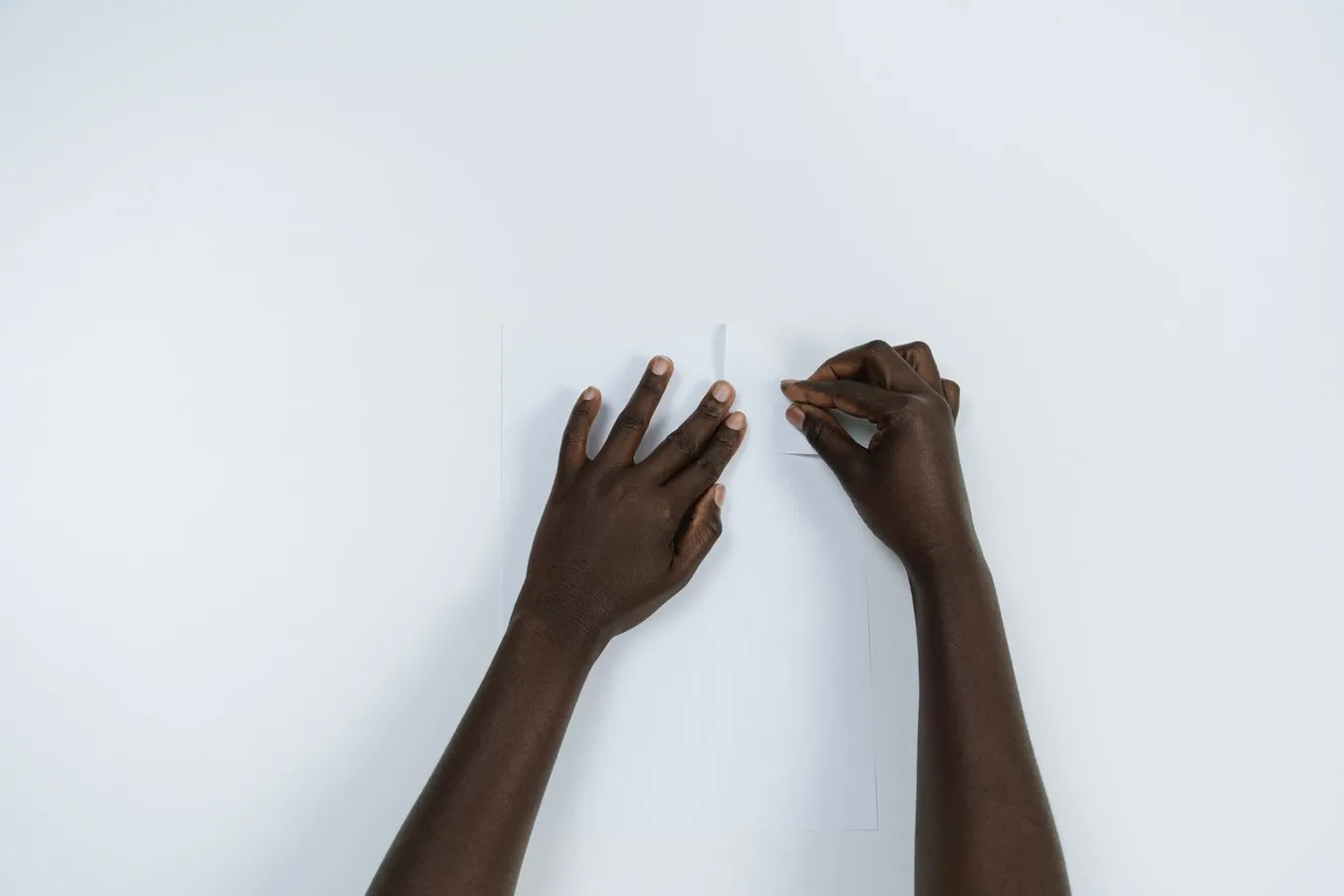
Two sheets arrive together in a wrapper. One bends readily along the proposed spine and the other pushes back a little. A mark printed along an edge makes them look like the same format. Before folding a full stack, a book maker can get more information from two motions involving a single expendable sheet than from the wrapper dimensions. The motions need to be gentle enough to keep a permanent bend from doing the work of the test.
Hold the paper at opposite edges and let the surface curve gently. Keep the arc shallow and look at the direction of its long central ridge. Put the sheet down, turn it a quarter turn, and try the same movement again. Compare how readily you can make that arch and how naturally the sheet comes back toward flat. Repeat each movement from the ends rather than squeezing near the middle. A difference that repeats as the sheet turns is more useful than a first impression of which direction felt nicer.
Let the comparison establish a direction
Machine-made paper can feel more willing to fold in one orientation. A spine commonly follows that direction. If you find yourself describing the motion as across the short side, make a small arrow on the sheet to show the line a fold would actually follow. People can mean two different things by across the sheet. A physical mark anchors the observation when you turn the material over or cut it to size.
Try half a sheet before the rest of a batch follows it. Make two small pieces with a known orientation cut from the same sample. Fold one in the easier direction and one in the other. Compare the crease from the side and lift the loose half. The fold should speak to the sort of book you plan. A crisp little booklet benefits from a clean edge, while a cover that needs to flex repeatedly places more importance on how readily it opens. Write the effect you can see along each fold.
Carry the arrow into the page layout
A folded page needs its spine to run a particular direction on the sheet. Place an empty paper model on the sample and lay the spine along the arrow. Now check the destination of a page title or illustration. If the drawing will fill a format that only fits by turning the page, paper orientation becomes a layout decision. You could reduce the format, choose a larger sheet or check another stock. Testing before printing leaves all of these choices available.
For a thin paper that feels almost identical when bent in either direction, keep the result provisional. Prepare a small sample of several nested sheets and try it open. The sample will include the way the folds support one another. A difference you could barely feel in one leaf might become clearer in a group. You can also keep an extra sheet oriented like the better sample to use as a reference while working.
Repeat on the cover stock
A cover and its inner pages need their own trial. Imagine the interior has a supple fold and the wrapper has a stiff one. The booklet may then close neatly and still fight a reader at the first spread. Reverse the comparison and check the wrapper in both directions against the same inner fold. Do it with a spare sample of the actual cover stock if possible. Different materials can hide their behavior under the pressure of making a new crease.
Record the comparison as an observation rather than a rule for every package carrying the same description. A sketch can show the arrow, the planned format and which crease was cleaner after opening twice. File it with the paper that produced it. A clean fold gives a small book a convenient place to start. The mark gives the next book enough information to use the same starting point.
If the finished book also uses paper from another pack, repeat the quick bend on that stock before cutting it to the same dimension. Keeping the marks separate preserves which material produced each result.