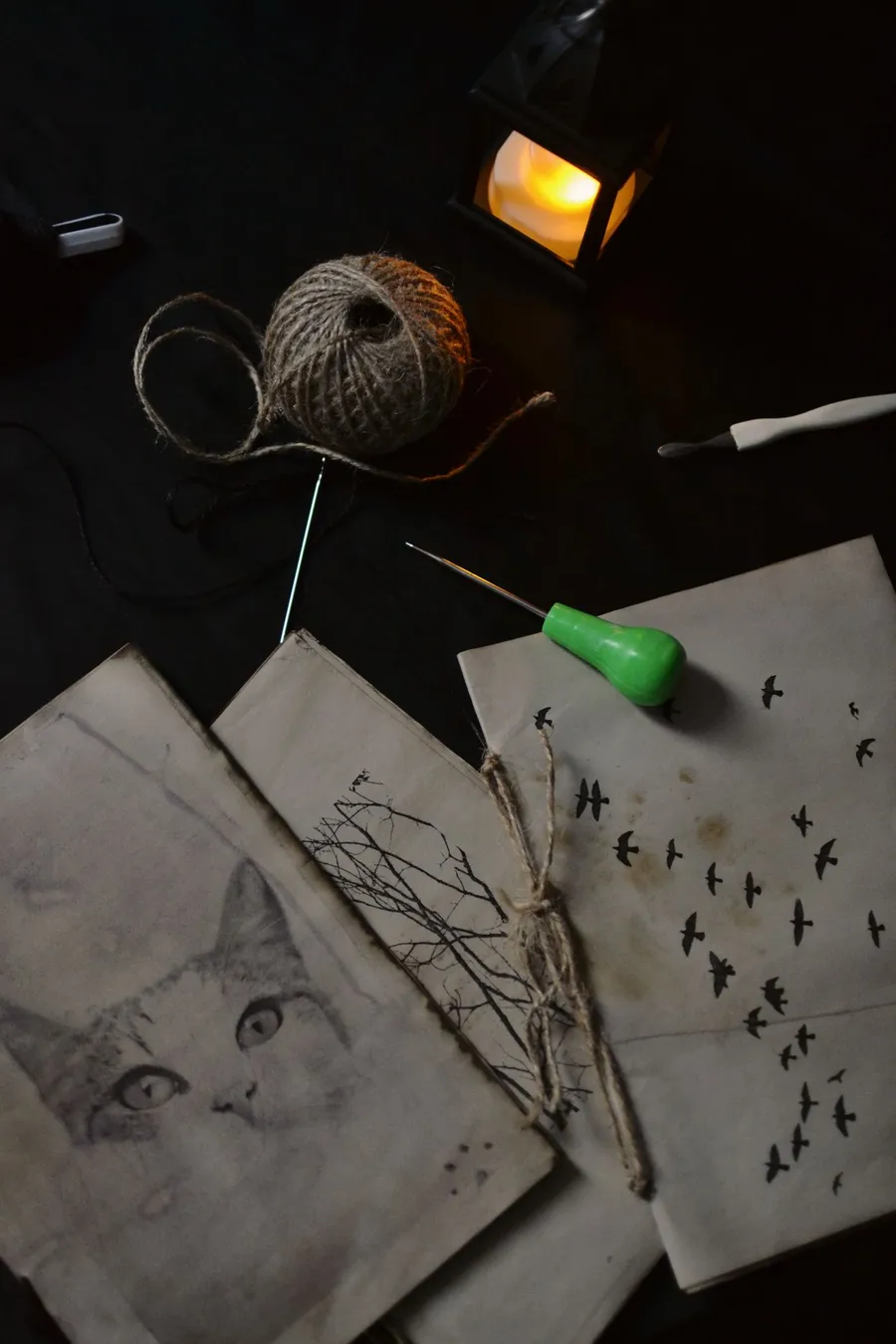
Five small journals are stacked near a door. Their covers use the same paper and nearly the same shape. Two belong to different people and one is used only for measurements taken outside. Because the outside is quiet, the first opening supplies most of the identifying information. That makes the user lift a notebook, look inside and put it back before beginning the right task. A mark that works as part of the physical handling can move that decision to the right moment.
Observe where the books normally sit. From above you may see their whole fronts. On end in a tray you may see only the part nearest the opening. A book with a very thin fold may provide little space for words on its spine. Mark each sample temporarily in several places using loose slips or easily replaced samples. Then try to identify a book while picking it up with only one hand. The first visible signal needs to be available where the location permits a look.
Choose a distinction with a practical meaning
A short written topic can be enough when the book is kept face up. A noticeable strip at the outer edge can remain recognizable in a stack and may feel more private. A slight change of material can offer something useful to a hand reaching into a bag. Form a relationship between the signal and the decision. The book that always goes outdoors might be identifiable by a durable edge marker. The book needed for a particular topic might be easiest to find by a readable word. Readers should understand the label with the least handling that serves their purpose.
Try a label that leaves room for a changing project. A moving slip can carry the current topic or owner if the cover is reused. First give it a place that makes it easy to remove without accidentally shaking it free. A fixed mark is simpler for a permanent purpose. It can be part of the original cover layout rather than an adhesive layer that catches in a pocket. Put both ideas on spare wrappers and run the handling action repeatedly.
Turn the book as its owner would
Some journals are deliberately designed to open from either direction. If a signal implies one top or one front, check it against the way all parts have to be used. A pair of books could borrow the same marked corner while reserving different zones for written titles. The recognizable mark can tell you which one you picked up. Text inside can orient you to a current date or section. These two jobs need not occupy the same little corner.
Look at your temporary marks from different positions and under ordinary light. A label that is easy to read on an empty table may disappear behind a nearby journal. Move a real notebook in front of it and watch the part that remains. If color is the only distinction, consider adding a word or shape. A good mark can identify a book even when the room is dim or a cover's surface changes after a lot of handling.
See whether another person can use the system
Set one book aside from the group and ask someone to find the other using its ordinary name. Let them tell you which clue arrived first. They may use the edge rather than the bright front labels the maker expected. Try putting the books back in a different order. If the group can only be identified in its original arrangement, the stack may be acting as the memory. Decide whether the book needs an independent mark because it is likely to move.
Transfer the smallest effective signal to a finished sample and carry it through a normal day of opening, closing and putting away. The label can remain quiet enough to belong to the cover and distinct enough for a person to select the right book. Notice the moment the mark becomes useful. When it appears before the reader has to interfere with any working pages, the cover is helping the book enter the right task.